
Build Systems that Work in Every Condition
Solutions That Stand Strong When the Network Goes Down

Offline-first Thinking
We realise that technology is most powerful when under pressure — when the lights go out, the signal drops & the systems we depend on fail. Those are the moments that the strength of a tool is measured not by its complexity, but by its resilience.
In the past week, in Southern New Zealand — our region faced a major storm.
Huge winds battered the lower South Island & a massive amount of trees came down. Electrical infrastructure was compromised & turned off throughout the region.
Roofs were stripped off of buildings, a lot of things were pushed over, & the lights went off for most Southlanders.


Even four days later over 17,500 people had no electrical connection (a large proportion of our population). It was at that time that our teenagers had more friendly visitors (as there was no internet to consume them), the community cooked for each other, showers & basic facilities went on open offer to the community (since water supplies stopped for quite a few days). Chainsaws came out & firewood even still now is being produced in mass.


It’s times like these when we realise that ‘preparing to live offline’ is not a step backward — it’s a step toward being the best we can be.
Our place in Lumsden carried on functioning, even with the power off. Water was heated by the wetback fireplace, & our gas stovetop still cooked beautiful food.
But this week was a confirmation to me personally that we need an alternative electrical power supply, we need small buildings, water tanks & food supply chains.
Candles are great for a few nights, but we have come to realise that with solar, wind power, or backup power supplies that don’t rely on the grid, we will have more capacity to serve our community; to provide a haven & think beyond survival.
My wife & I have plans for our region, the wider world, even to find more peace…
We choose to keep go well!
Building systems offline is about designing our capacity, so we don’t collapse when the our world faces challenges. It’s about giving people the power to stay connected, creative & capable, no matter what happens.


The Fragility of Following the Crowd
Most people assume the major network will always be running — that the power will stay on, water will run, supermarkets will supply & that the Internet will forever run in sync. It seems absurd to think that devices won’t always connect, that power won’t always flow until the wind blows.
But when the network falters, so does productivity, communication, & our sense of autonomy & freedom — unless we plan. The truth is, the most used systems create dependence. The more reliant we are, the more fragile we are.
‘Offline-first thinking’ flips that mindset.
It asks, “How can we take the action needed when nothing else does?”
“The best innovators plan to function when foundations shift, when the wind blows, & mainstream systems close off.” Stevey Chernishov


Offline-First Design
‘Offline-first design’ begins with these simple principles:
We prepare so the road doesn’t have to get too rough.
We design so that if the App Store closes, we still have tools.
We create systems that provide heat, light, food & communication even when the grid goes dark.
We are not anti-technology — we build ‘resilient technology’. It means values function first — & that we have more than enough if the shops close.
Offline-First Preparedness Examples:
Food Supply
Community food gardens with heirloom seeds that reproduce naturally, not dependent on commercial seed chains.
Local dehydrators, solar dryers & root cellars preserving food.
Manual grain mills & non-electric cooking tools.
Printed recipe books & food preservation guides stored in waterproof binders.
Electricity & Energy
Solar grids that store energy in batteries & can power essentials.
Generators for charging devices & keeping food chilled.
Renewable energy setups (small wind turbines, hydro from nearby streams).
LED lanterns & efficient stoves that operate off minimal power.
Water Systems
Rainwater catchment tanks with manual filtration or gravity-fed purification.
Ceramic & charcoal water filters requiring no power or chemicals.
Local greywater recycling systems designed for household reuse.
Printed water safety charts and filtration instructions for emergencies.
Shelter & Comfort
Locally sourced building materials
Passive solar design (homes built to retain warmth or cool naturally).
Off-grid homes. Small Buildings that can function when bigger ones don’t.
Modular shelters or cabins that can operate independently.
Communication & Information
Offline communication tools using Bluetooth mesh or LoRa radio networks.
Local bulletin boards, community radio & USB drives for news exchange.
Offline-first apps that store data locally (maps, notes, first aid manuals).
Printed directories of local contacts, emergency plans, and maps.
Offline-first design is about continuity of community — not just survival.
It’s about designing systems that breathe on their own, that can stand when everything else is offline.
Resilience
In nature, resilience comes from diversity — from having many ways to adapt.
The same principle applies to us. A healthy system doesn’t rely on a single point of failure. It’s supported by backups, alternatives & small-scale independence.
When one part of the system breaks, the others continue to function.
Think of it like a forest: when one tree falls, the others still stand.

When the Network Goes Down
The world we speak of here is not futuristic. It’s being built right now, by designers & creators who believe in simplicity & strength.
Offline-first systems remind us that we can thrive even if disconnected.
In testing moments we rediscover what really matters — ingenuity, local networks & our natural ability to thrive.
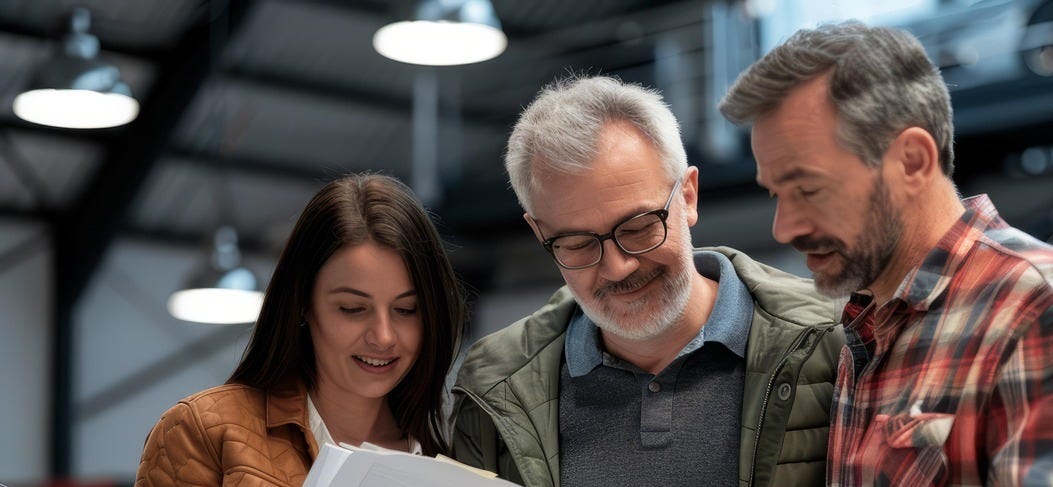
Stand Strong
‘Offline-first design’ is a philosophy of empowerment. It prepares us for freedom.
By combining practical technology with clever thinking, we create communities that endure disruptions & innovate through challenges. We shift from dependence to confidence — from fragility to strength.
Our brightest future will be in the hand of the most prepared. Let’s embrace the mindset that comes from clarity, creativity & connection.
Strong systems don’t just survive the storm — they keep the lights on.


More inspiring stories coming... :)
Great post Stevey.